The morning routine behind the shop floor
Walk into most farm shops or independent retailers early in the morning, and you’ll recognise the routine straight away. Teams print labels, check shelves and replace tickets by hand before the doors open.
It’s familiar, and for many retailers, it’s simply how things have always been done.
The problem is that this process quietly eats into the day. These aren’t big, obvious tasks. They’re small, repeated jobs that build up across the week. When the shop gets busy, they don’t disappear. They compete with everything else for attention, often pulling staff away from customers at the very moments they are needed most.
The hidden cost of paper labels
Manual price changes rarely feel significant on their own. Across a full shop, however, they quickly add up. Retailers often spend hours each week updating labels, especially where ranges are broad and pricing changes regularly.
In a farm shop or food hall, that complexity increases. You manage fresh produce, variable weights, short shelf lives and supplier-driven price changes that can shift quickly. That creates constant pressure to keep pricing accurate across the shop.
This is where issues start to show. Teams spend time printing and replacing labels, while the risk of a mismatch between the shelf edge and the till increases. When prices don’t match up, customers notice immediately. What starts as an operational task quickly becomes a customer experience issue.
A different way of doing it
Electronic shelf labels remove the need for manual price updates…
Instead of treating pricing as a chore, you manage it centrally and push changes to the shelf edge. Working with trusted retail partners such as SURE, retailers update pricing once and see it reflected across the entire shop.
What once took hours now happens in seconds. More importantly, it removes a task that adds little value to the customer experience, freeing up time for the team.
You're in charge
Electronic shelf labels also give you control over how and when prices change.
Updates can be applied instantly where needed, but they can also be scheduled in advance to go live at a specific time or date. That means you stay in control of pricing, without needing to be in the shop to make it happen. For many retailers, this removes a common concern that prices will change unexpectedly or without oversight.
If you’ve not seen electronic shelf labels in action before, this short video shows how they work on the shop floor.
Electronic Shelf Edge Labels – CJ Lang Case Study (Courtesy of SOLUM)
What actually changes in store?
The impact of electronic shelf labels shows up in the day-to-day running of the shop. This is not about adding something new. It’s about removing a layer of manual effort that sits behind almost every transaction.
The most immediate change is the removal of routine label updates. Teams no longer print, laminate, cut and replace tickets across the shop floor. Instead, they apply price changes centrally and push them instantly to every label. This saves time and reduces the risk of errors during busy periods.
Accuracy improves in a way customers notice. Shelf-edge pricing and till pricing remain aligned, eliminating the awkwardness of discrepancies at checkout. These moments may seem small, but they directly affect trust.
Customers first: A digital signpost

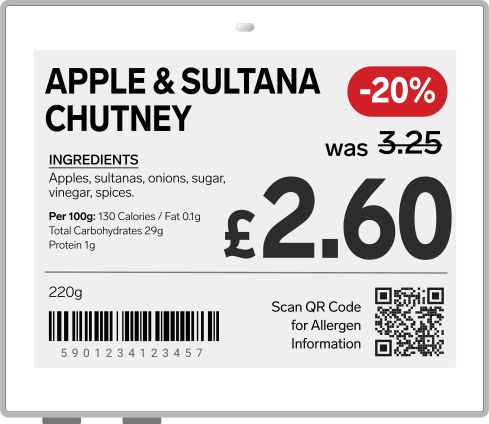
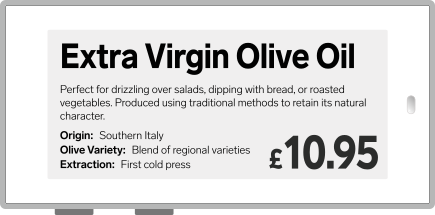
Electronic shelf labels are not limited to pricing alone. There is also an opportunity to improve how information is shared with customers. Depending on the format, they can provide additional detail such as product provenance, dietary indicators like vegan or vegetarian, or even ingredients and allergen information accessed through QR codes.
In a farm shop or deli environment, where customers often care about where products come from and how they are made, this adds another layer of value without adding any additional effort for the team.
In a fresh food environment, speed matters. Teams can adjust prices to reflect shelf-life, demand, or supplier changes without delay. This helps reduce waste and protect margin, without adding extra work.
For multi-site retailers, the benefits extend further. Teams apply pricing changes once and push them across every location. This keeps stores aligned, removes duplication and avoids missed updates.
Electronic labels also enhance the shop’s look and feel.
Consistent, clear pricing creates a more considered and professional presentation, supporting the quality of the products on display.
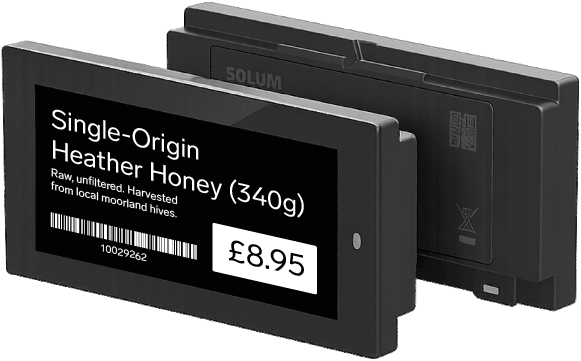
Why retailers are moving away from paper labels
When you take a step back, the difference becomes clear.
This is not just about replacing tickets. It’s about removing a set of repetitive tasks that sit behind the day-to-day running of the shop.
Electronic shelf labels offer clear advantages:
- No manual label changes: Teams update prices centrally without printing or replacing tickets.
- Consistent pricing everywhere: Shelf edge and till stay aligned, reducing errors.
- Faster response to change: Teams adjust pricing quickly to reflect supply, demand or shelf life.
- Time back for the team: Staff spend less time on admin and more time with customers.
- Improved store presentation: Clean, consistent labels support a more professional look and can display additional product details.
- More efficient stock taking: Labels can switch to a stock-check format with barcodes and visual indicators to track progress without paper lists.
- Flexible merchandising across the shop: Labels can be used beyond shelves, supporting displays, promotions and feature areas with consistent, up-to-date information.
- Reduced waste: No paper, no ink and fewer discarded labels.
Each benefit is small on its own, but together they remove significant friction from the trading day.
An example in practice
At Calcott Hall Farm Shop, electronic shelf labels now form part of the day-to-day operation. Price updates that once took time now happen in moments, allowing the team to focus on customers rather than administration.
🟩 You can read more here: Calcott Hall Farm Shop Case Study
The shop still feels the same to customers. Behind the scenes, however, everything runs more smoothly.
What to think about before making the move
Electronic shelf labels work best when implemented properly. Store layout plays an important role, particularly where different shelving types or display areas are involved. Integration with your EPOS system is also essential, ensuring pricing stays consistent across shelf and till.
Rollout needs planning, especially in a live retail environment. Teams also need to feel comfortable using the system as part of their daily routine. Most electronic labels offer battery life measured in years, but it is still worth considering as part of long-term planning.
Done well, this is about removing complication and complexity.
A simple question
If you are still printing and replacing labels every week, it is worth asking whether that is the best use of your time.
Click below, and we’ll arrange a quick chat to discuss our Storefront™ EPOS solution and how moving to Electronic Shelf Edge Labelling could get your pricing strategy and margins back on track.